Hogwarts School of Witchcraft and Wizardry
The Tales of Beedle the BardHogwarts School of Witchcraft and Wizardry is more than a setting in the presentation of The Tales of Beedle the Bard: it is a place where the stories are read, staged, argued over, and preserved. Its classrooms, Great Hall, library, and archives connect the tales’ moral questions to the school’s own history and institutional choices.
Reading and Preservation
The tales have long been familiar to Hogwarts students as bedtime stories, as well known in their world as Cinderella and Sleeping Beauty are to Muggle children. Their place in the school’s imaginative life gives the collection a shared cultural standing, even as its stories challenge easy assumptions about magic: their magical protagonists find that having power does not make their troubles simple to solve.
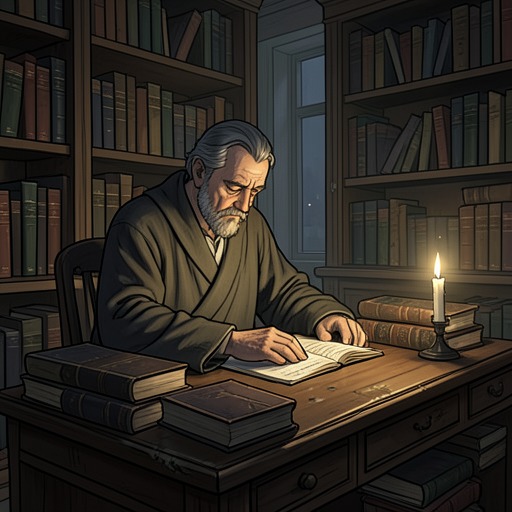
The school’s archives also became the repository for papers that Albus Dumbledore left in his will, including his notes on the tales. The notes were discovered among those papers, although their original intended audience—Dumbledore himself or future readers—remains unknown. Minerva McGonagall, by then Headmistress, granted permission for them to be printed alongside a new translation by Hermione Granger. This editorial decision placed Dumbledore’s historical observations and personal recollections beside the stories for both wizarding and Muggle readers.
The Great Hall Performance
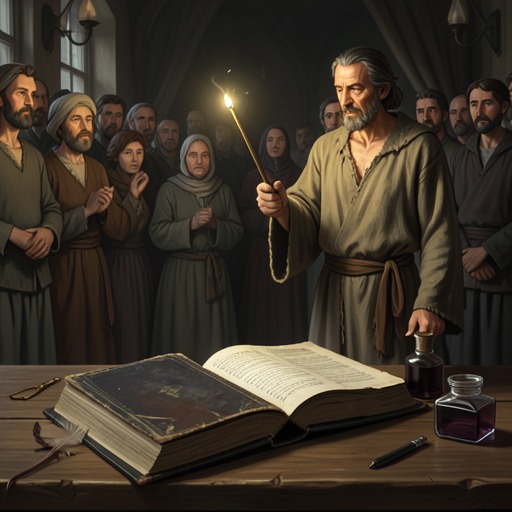
The enduring popularity of The Fountain of Fair Fortune led to an unusual theatrical experiment at Hogwarts: the school’s sole attempt to add a Christmas pantomime to its celebrations. Herbert Beery, the Herbology master and an enthusiastic amateur dramatics devotee, proposed an adaptation as a Yuletide treat for staff and students. Dumbledore, then a young Transfiguration teacher, was assigned the special effects. His tasks included a working fountain and a miniature grassy hill designed to sink slowly into the stage as the four characters appeared to climb it.
The scenery performed as intended, but the production’s human and magical elements did not. Beery had not accounted for the emotional entanglements among the student cast: the performers playing Amata and Sir Luckless had been a couple until an hour before the curtain rose, when Sir Luckless transferred his affections to the student playing Asha. The conflict onstage was overtaken by a separate mishap involving the enormous Worm supplied by Silvanus Kettleburn, the Care of Magical Creatures teacher. It proved to be an Ashwinder enlarged by a spell; it burst into sparks and dust, filling the Great Hall with smoke and scenery fragments. Its fiery eggs ignited the floorboards, while the students playing Amata and Asha began duelling and Beery was caught between them. Staff evacuated the Hall as the fire threatened the building.
The evening ended with the hospital wing full. The Great Hall retained the smell of smoke for several months, and Beery’s head took still longer to return to its usual size. Kettleburn was eventually taken off probation. The incident had a lasting institutional consequence: Headmaster Armando Dippet imposed a blanket ban on future pantomimes, establishing a non-theatrical Christmas tradition that continued at Hogwarts.
The Library and the Book-Ban Dispute
The Fountain of Fair Fortune remained one of Beedle’s most popular tales despite objections to its subject matter. Among those who demanded its removal from the Hogwarts library was Lucius Malfoy, a descendant of Brutus Malfoy and a former member of the Hogwarts Board of Governors. He argued in writing that fiction or nonfiction depicting relationships between wizards and Muggles should be banned, on the grounds that such stories might lead his son to compromise the purity of his bloodline.
Dumbledore refused to remove the book, and a majority of the Board of Governors supported his decision. In his written reply, he challenged the asserted purity of so-called pure-blood families, pointing to their disowning, banishing, or concealing Muggles and Muggle-born people in their family histories. He argued that no witch or wizard had blood untouched by Muggle ancestry, and that excluding books about this reality would be both illogical and immoral. The dispute made the school library a site of conflict over what students should be allowed to learn, as well as over the prejudices concealed by claims of blood purity.
The exchange also changed the relationship between Dumbledore and Malfoy: it marked the beginning of Malfoy’s campaign to remove Dumbledore as Headmaster, and of Dumbledore’s counter-campaign to remove Malfoy from his position as Lord Voldemort’s Favourite Death Eater. The argument over a children’s story thus reached beyond the shelves into the school’s governance and the political struggle surrounding its headmaster.
Institutional Memory and the Tales
The pantomime and the library dispute show two different ways Hogwarts engaged with Beedle’s work. In the Great Hall, the school tried to turn a familiar tale into a communal spectacle, but the performance ended in disruption and a lasting ban. In the library, the school’s leadership defended the tale’s availability when a governor objected to its challenge to blood-purity ideology. In both cases, the story’s place at Hogwarts exposed tensions beyond the tale itself: between theatrical enthusiasm and institutional caution, and between open inquiry and efforts to control what students read.
The school also anchors the collection’s retrospective frame. Dumbledore’s notes survived among papers entrusted to the Hogwarts Archives, and their later publication depended on the permission of the school’s Headmistress. His recollections of teaching, school events, and the history behind the stories make Hogwarts part of the means by which the tales are interpreted, not merely the place where their readers encounter them.